
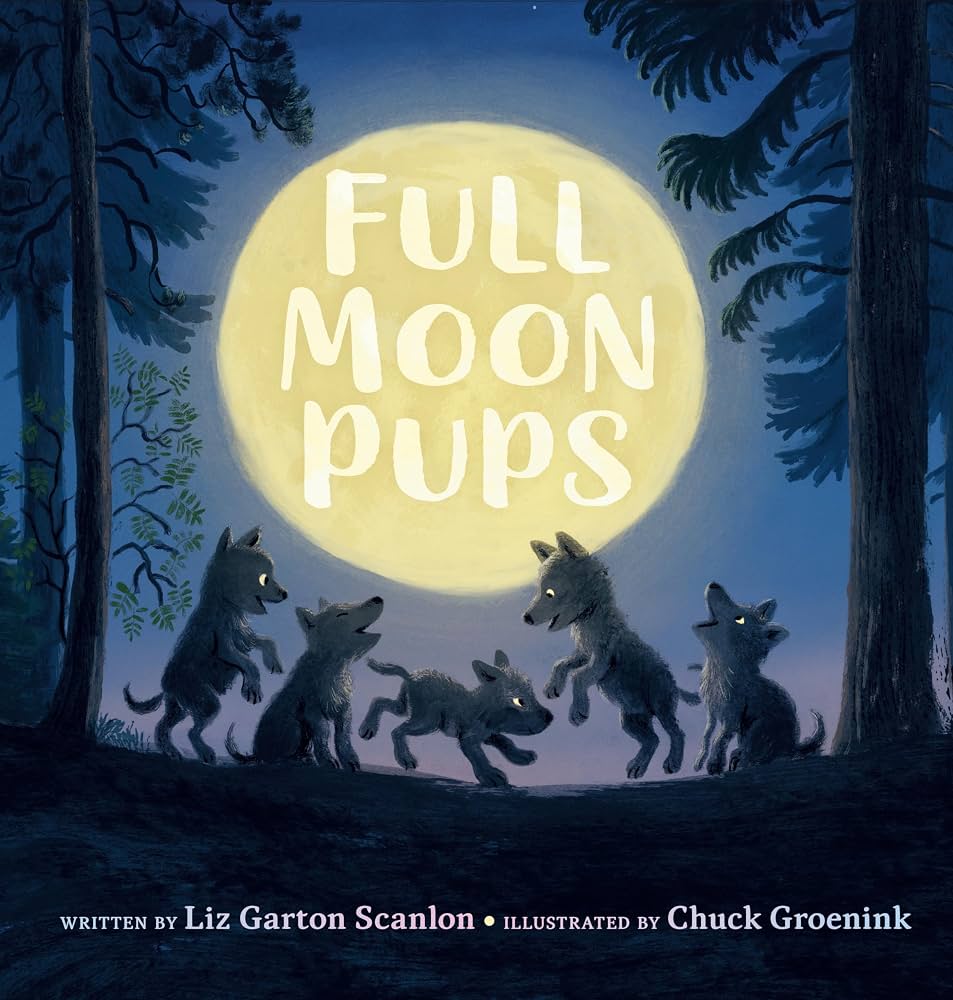
Full Moon Pups
Author: Liz Garton Scanlon
Illustrator: Chuck Groenink
A Book Bridges Activity Guide created by
Kayla Bowden, Washburn University Education Major
About Book Bridges
Books can open the door to conversation, play, discovery, and learning. Book Bridges helps families extend shared reading through questions and hands-on activities that connect stories to language, science, math, art, and everyday life.
Book Bridges is a collaboration between Literacy Bridges and the Washburn University Department of Education. Undergraduate students preparing to become licensed educators at Washburn create these guides using books from the Dolly Parton Imagination Library collection.
Summary of Full Moon Pups
A litter of wolf pups enters the world beneath a full moon. Over their first month, their mother and the rest of the pack care for them as the pups grow, explore, and discover the forest around them.
As the pups change, so does the moon overhead. Its changing phases mark the passage of time, connecting the pups’ early development with a cycle children can watch unfold in the night sky.
Read Full Moon Pups Together
An English read-aloud of Full Moon Pups is available on YouTube.
About the Author & Illustrator
Liz Garton Scanlon has written around 24 books, including several award-winning titles. Her honors include the Wisconsin Association’s Outstanding Achievement in Children’s Literature Award, a Kirkus Best Book of the Year recognition, and a Margaret Wise Brown Honor Book Award.
Chuck Groenink has illustrated more than 20 children’s books and won the Fiep Westendorp Prize. He has worked with authors from the United States and Europe.
Questions to Ask Before, During, and After Reading
Talking about a story before, during, and after reading helps children think deeply, connect to the characters,
and build a love of reading that lasts a lifetime.
Before Reading
- What do you think this book will be about just by looking at the cover? How do you know?
- What do you think a pup is?
- Have you ever seen a full moon? What did it look like?
During Reading
- On pages 9 & 10, how do you think the pups are feeling now?
- On pages 13 & 14, why do you think wolves live in packs?
- On pages 25 & 26, why do you think the illustrator keeps showing the moon changing?
After Reading
- How did the pups change as they grew?
- What was your favorite part of the story, and why?
- If you could be one of the wolf pups, what would you want to do next?

Extending the Book
The story doesn’t have to end when the book closes. These activities give you and your child somewhere to take it next, using materials you already have at home.
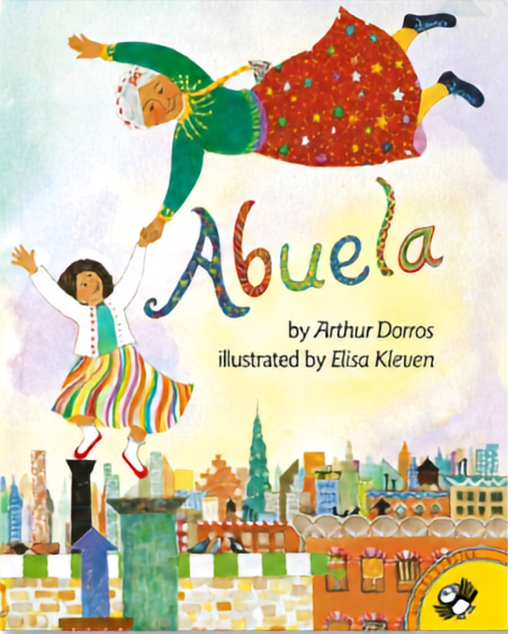
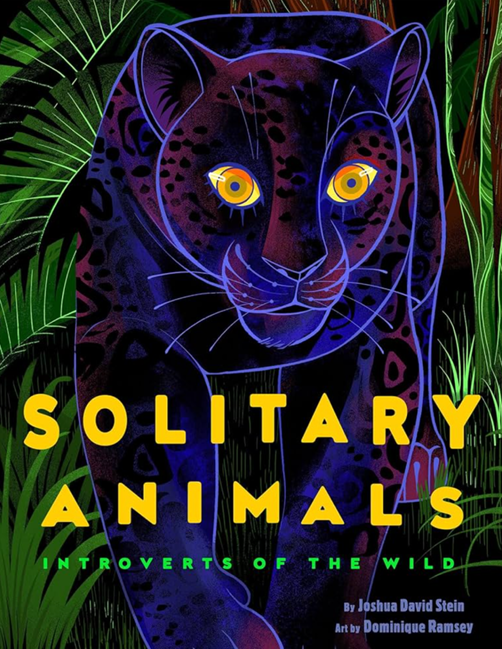
Keep the learning going by reading more about moon phases and real wolves. These companion books help families compare fiction with facts and build new vocabulary.
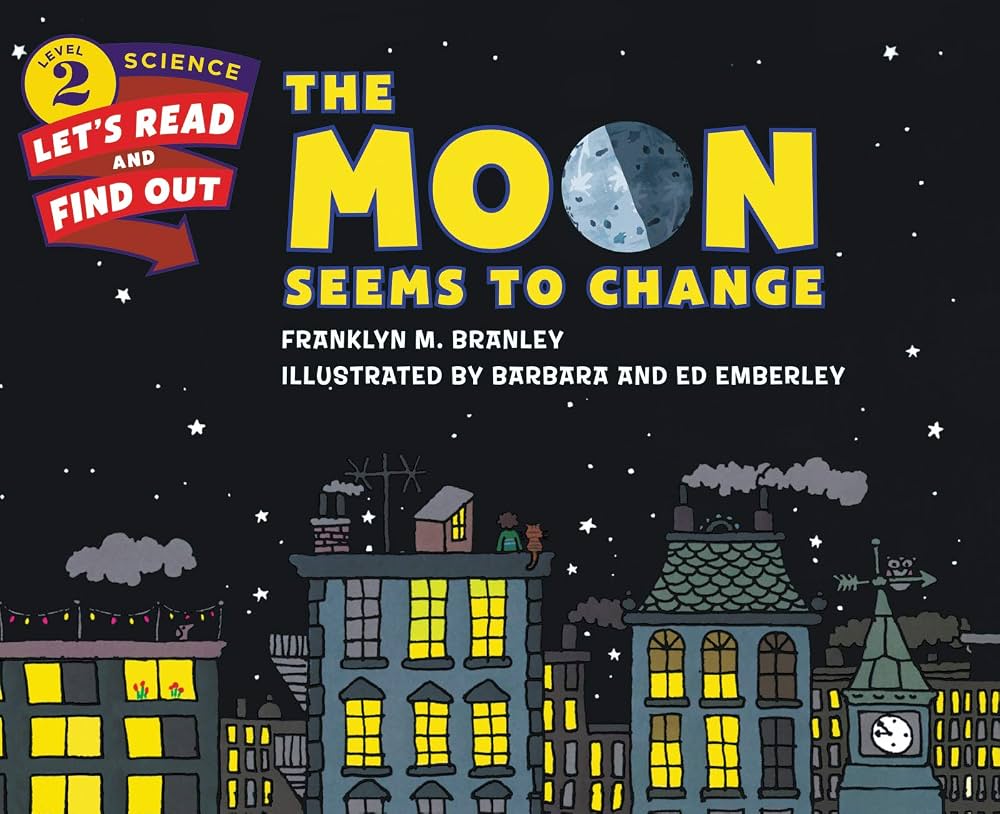
The Moon Seems to Change by Franklyn M. Branley, illustrated by Barbara and Ed Emberley — A simple nonfiction book that helps children notice the moon’s phases and learn words for each shape they see in the sky.
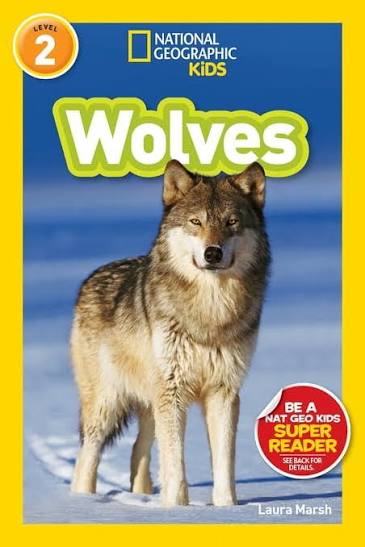
Wolves — National Geographic Kids — A nonfiction companion that helps children compare the wolves in the story with real wolves in nature.
Talk About It
- How is one of these books similar to Full Moon Pups?
- What did you learn about the moon or about wolves?
- How is a storybook wolf different from a real wolf?

Materials Needed: Full Moon Pups and, for the challenge, paper and something to draw with.
Count rhyming words with younger children, or use forest animals to practice addition and subtraction with older children.
Younger Readers
- Count each rhyming pair you find.
- Go back through the book one page at a time.
- Listen for words that rhyme.
Older Readers — Try These Problems
- If there are 4 birds and 3 fly away, how many birds are left?
- If there are 2 deer and 3 more join them, how many deer are there?
- If there are 6 foxes and 2 run away, how many foxes are left?
Challenge:
Draw a forest scene and make one more animal math story of your own.
Materials needed: paper and something to write or draw with

Imagine a day in the life of a wolf pup. Write a short story from the pup’s point of view.
A Day in the Life of a Wolf Pup
- Pretend you are a wolf pup waking up in the forest.
- Write about what you see, hear, and do.
- Tell who is in your wolf pack.
- Add a feeling and a detail about the moon or night sky.
Writing Starters
- I woke up when…
- I heard…
- My pack and I…
Materials needed: A journal or folded paper and a pencil..
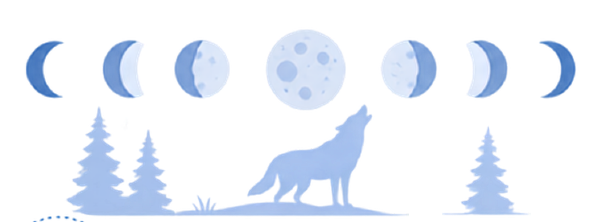
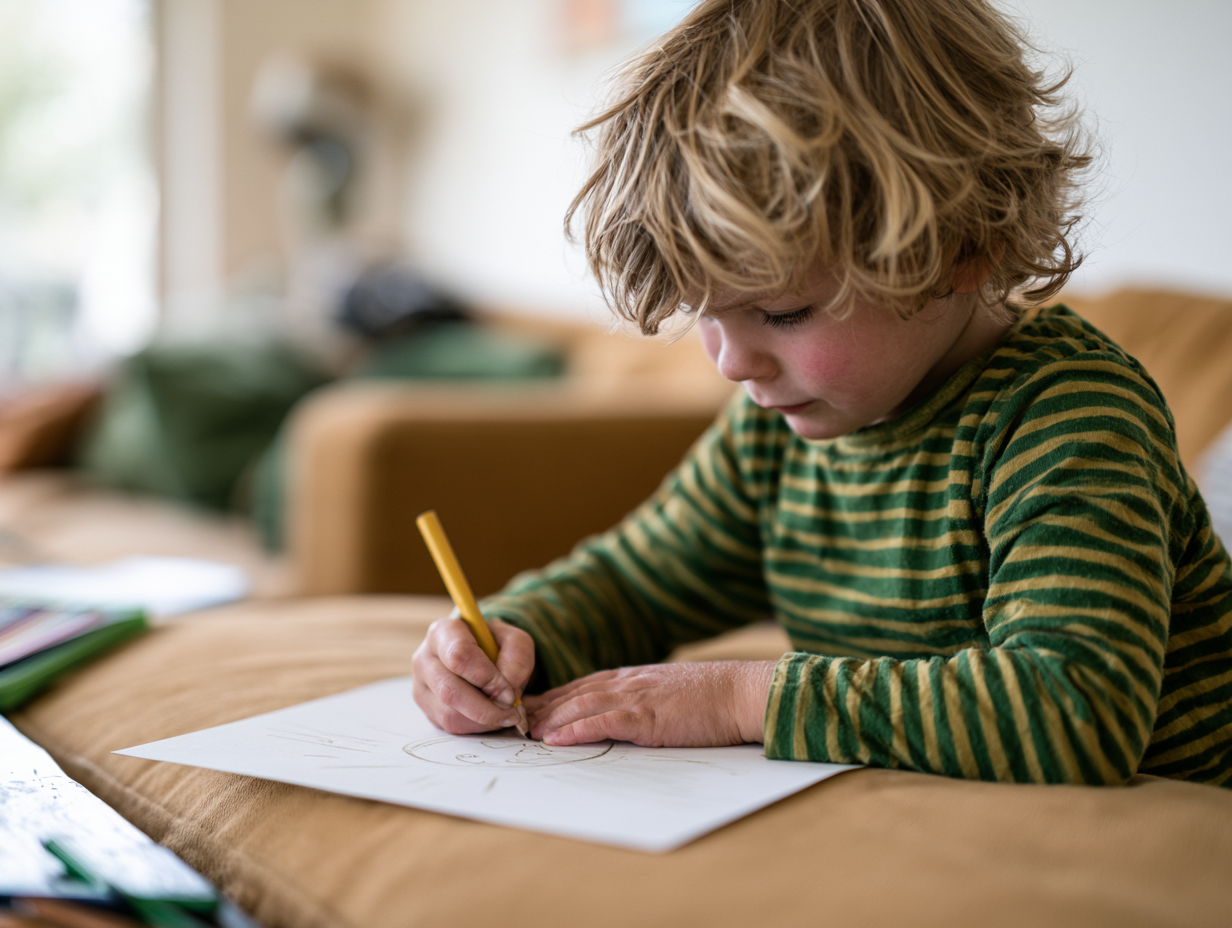
Track the moon over time to see how its shape changes from one observation to the next.
Steps
- Choose a time to observe the moon.
- Look carefully at the moon’s shape.
- Draw what you see in your moon journal.
- Compare tonight’s moon with your last drawing.
- Predict how the moon might look next time.
Reflect
- How did the moon change over time?
- Which shape did you notice most often?
Materials needed: paper and pencil/pen/crayons.
Wolves live and work together in packs. Explore teamwork and community by first working independently and then joining together to complete a shared drawing.
Steps
- Draw a forest scene on a large sheet of paper.
- Let your child work alone for a few minutes first.
- Join in and finish the drawing together as a team.
- Talk about how your teamwork was like a wolf pack working together.
Discuss Together
- Was it quicker to work alone or as a team?
- How did we help each other on the drawing?
- Why does teamwork help wolf pups stay safe?

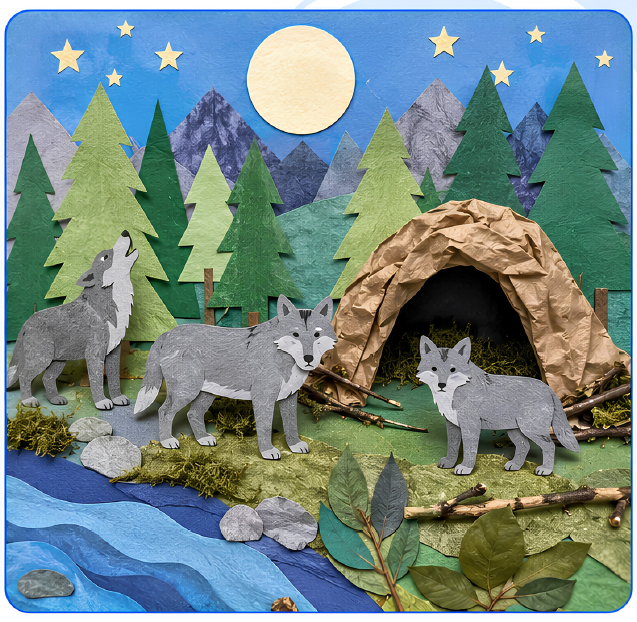
Materials needed: Paper, glue, crayons or markers, and optional leaves, grass, or twigs.
Create a cozy forest home for your wolf pack using drawing, collage, and materials you find outdoors.
Steps
- Talk about what wolves need in a habitat.
- Build a forest background with paper, crayons, or natural materials.
- Add details like a den, trees, grass, or water.
- Draw or glue in a wolf or wolf pack.

Get More from Literacy Bridges
Want more ideas like these? The Literacy Bridges newsletter brings research-based literacy resources straight to your inbox.