
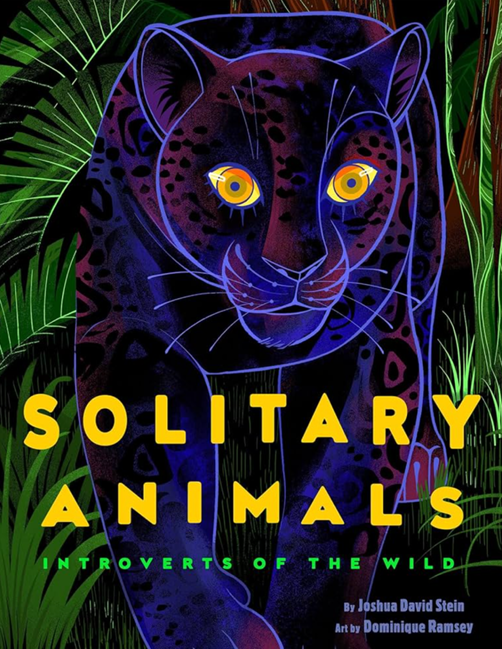
Solitary Animals: Introverts of the Wild
Author: Joshua David Stein
Illustrator: Dominique Ramsey
A Book Bridges Activity Guide created by
Katie Christner
Washburn University Education Major
About Book Bridges
Books can open the door to conversation, play, discovery, and learning. Book Bridges helps families extend shared reading through questions and hands-on activities that connect stories to language, science, math, art, and everyday life.
Book Bridges is a collaboration between Literacy Bridges and the Washburn University Department of Education. Undergraduate students preparing to become licensed educators at Washburn create these guides using books from the Dolly Parton Imagination Library collection.
Summary of Solitary Animals: Introverts of the Wild
Some animals gather in groups with names like prides, pods, and swarms. Others spend much of their lives on their own.
Solitary Animals: Introverts of the Wild explores what life looks like for animals that live alone. Young readers discover how solitary animals find food, stay safe, and meet their needs without a group.
The book also gives families a starting point for talking about different ways animals survive—and the advantages and challenges of living alone or together.
Read Solitary Animals: Introverts of the Wild Together
An English read-aloud of Solitary Animals: Introverts of the Wild is available online.
About the Author & Illustrator
Joshua David Stein is an author, journalist, and editor based in Brooklyn, New York. He writes books for children and adults and has contributed to publications including The New York Times.
Dominique Ramsey is an illustrator from Charlotte, North Carolina whose work has appeared in projects for companies including Netflix, Apple, and Walmart. When she isn’t illustrating, she enjoys documentaries, traveling, reading, and saying hello to every animal she meets.
Questions to Ask Before, During, and After Reading
Talking about a story before, during, and after reading helps children think deeply, connect to the characters,
and build a love of reading that lasts a lifetime.
Before Reading
- What might the word solitary mean?
- What animals do you know that live in groups?
- What animals spend most of their time alone?
During Reading
- What does solitary mean for the animals in this book?
- What clues helped you decide?
- What group names do you notice in the book?
After Reading
- Would you rather spend most of your time with a group or alone? Why?
- How might an animal feel or behave when it lives alone?
- Do solitary animals survive well by themselves? What from the book supports your answer?

Extending the Book
The story doesn’t have to end when the book closes. These activities give you and your child somewhere to take it next, using materials you already have at home.
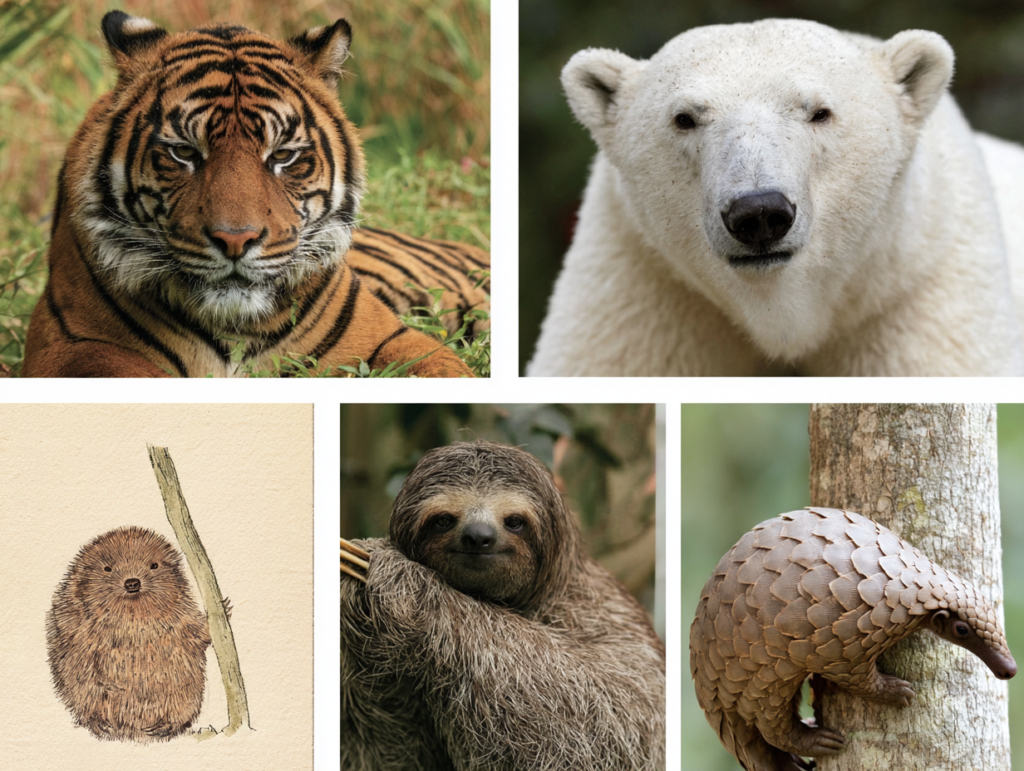
Materials needed: A children’s book about a solitary animal, either a physical book or an age-appropriate eBook.
Choose a children’s book about a solitary animal, such as a tiger, polar bear, sloth, or pangolin. If you don’t have a physical book available, find an age-appropriate option through an online library.
Talk About These Questions
- Does this animal hunt or find food better alone or with others?
- What advantage does it have living alone?
- What challenge might it face?
Want to access free eBooks through the Oxford Owl Free eBook Library? Free for ages 3-11 (registration or sign-in may be required).

Comparing the Lives of Animals

Materials needed: Books or other reading materials about one solitary animal and one group-living animal, plus paper and a pencil for recording notes.
Compare the lives of one solitary animal and one group-living animal. Use books you’ve read to gather information and record what you discover together.
Compare Two Animal Lives
- Read about one solitary animal and one group-living animal.
- Record three interesting facts about each animal.
- Find three differences and three similarities.
- Create a diagram to compare how they live. Discuss what you notice.
Animal Group Math

Materials needed: Paper and pencil.
Use the names and sizes of animal groups to practice multiplication.
- Six prides have five lions each. How many lions are there?
- One parliament has 17 owls. How many owls are in three parliaments?
- Six pods have 10 dolphins each. How many dolphins are there?
Challenge: Nine swarms have 30 bees each. How many bees are there?
Explore an Animal’s Ecosystem
Materials needed: Paper, pencil, colored pencils or markers, a book, and internet access.
Learn how an animal’s ecosystem supports it by researching where it lives and the features or behaviors that help it survive there.
Steps
- Choose an animal from the book.
- Research the ecosystem where it lives.
- Record the ecosystem name and plants found there.
- Note whether the animal lives alone or in a group.
- Identify features or behaviors that help it survive there.
Think Together
How does this ecosystem meet the animal’s needs?
Ecosystem Map
Materials needed: An electronic device with internet access.
Animals live in ecosystems all around the world, from deserts to tundra and from the sky to the ocean. Explore how climate and resources shape where animals live.
Steps
- Open the Animals Around the World map.
- Choose three animals from different regions.
- Read about each animal and its ecosystem.
- Compare the climate, resources, and survival features.
Questions
- What is the climate like?
- What resources are available?
- How do the animal’s features help it survive?
- What might happen in a different climate?

Create and send a post card
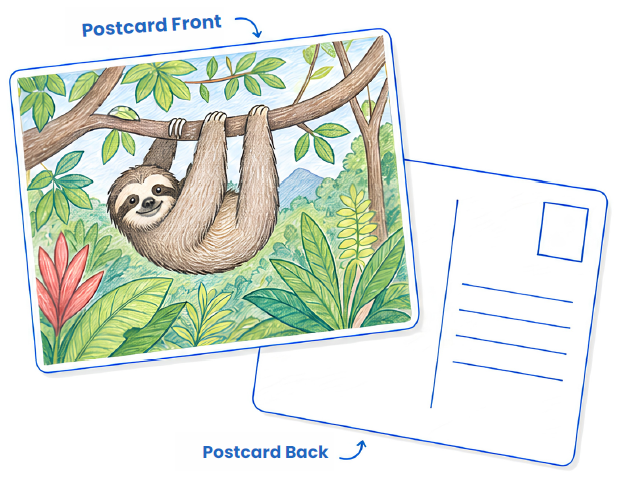
Materials needed: Paper, pencil, colored pencils or markers, a book, and internet access.
Create an ecosystem postcard about an animal you studied and share its world with a family member or friend.
Steps
- Choose an animal from your science activity.
- Divide the paper into a postcard front and back.
- On the front, draw the animal in its ecosystem. Include the ecosystem name and plants. If it lives in a group, show the group.
- On the back, write a message encouraging a family member or friend to visit the animal’s home.
Get More from Literacy Bridges
Want more ideas like these? The Literacy Bridges newsletter brings research-based literacy resources straight to your inbox.